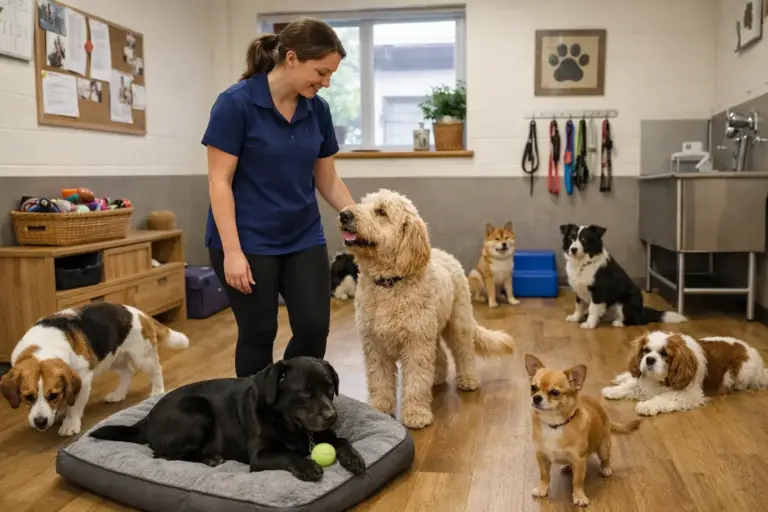
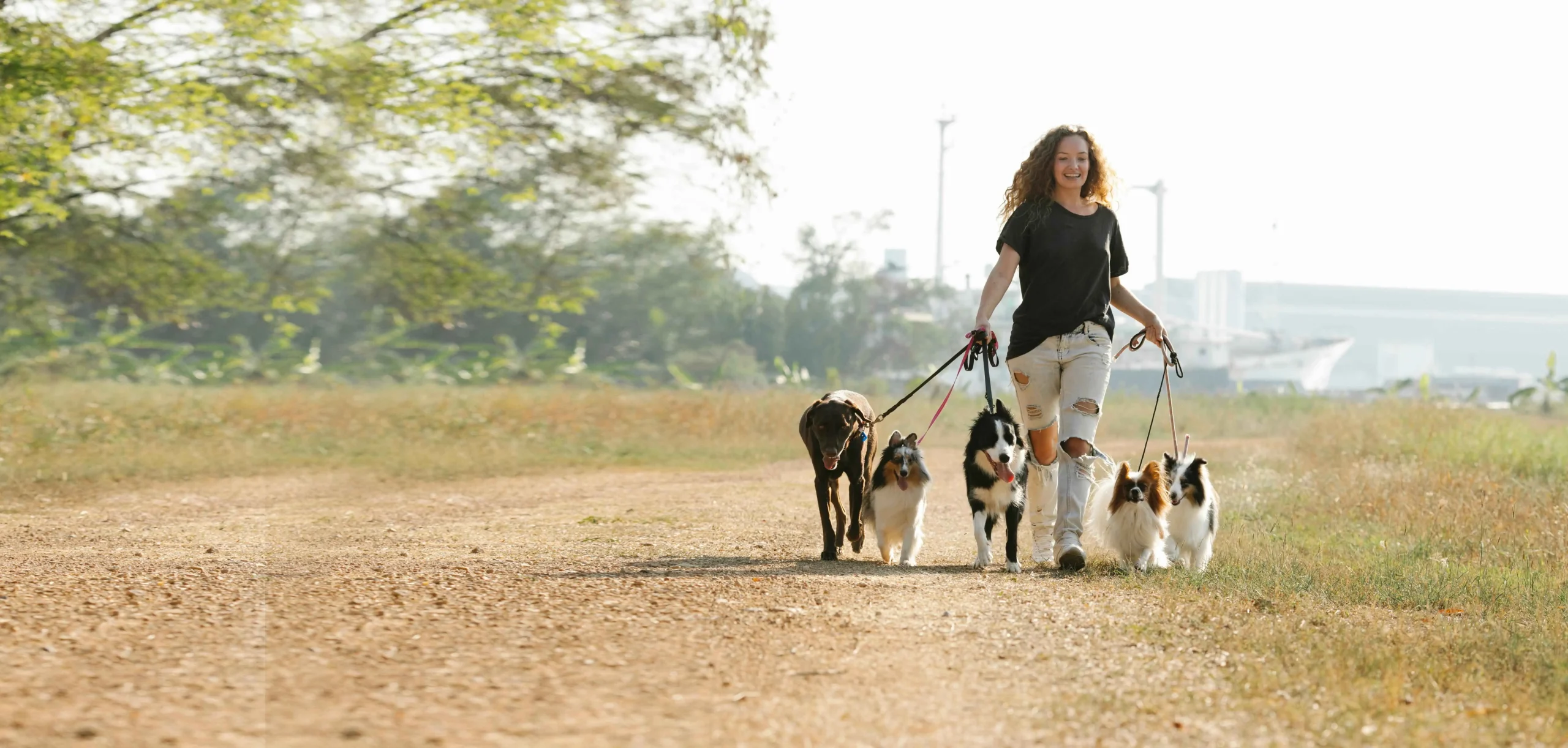
A tired dog is not always a calm dog. Physical exercise matters, but without something to think about, many dogs still end up bored, restless or wired. Enrichment fills that gap. It gives dogs a job to do, helps them switch off properly and makes everyday care far easier, whether at home or in a busy petcare setting.
Good enrichment does not need to be complicated. It just needs to be purposeful.
Interactive Toys and Puzzles
Puzzle toys and treat-dispensing games give dogs something to focus on, especially during downtime. Instead of pacing about or barking, they are busy working out how to get to the reward.
These are particularly useful on rainy afternoons or during quieter periods in daycare when dogs need mental stimulation without ramping each other up. A dog that has spent ten minutes working through a puzzle is often calmer than one that has had another frantic run around.
Scent Games and Nose Work
Sniffing is how dogs make sense of the world. Simple scent games tap into that instinct in a way that is both calming and tiring.
You can hide treats around a room, set up a basic scent trail or scatter food in long grass. Dogs get properly stuck into the task, using their nose rather than their body. This is especially helpful for anxious dogs or those that struggle to settle after walks.
In a daycare setting, short scent sessions often take the edge off group play and reduce overstimulation.
Agility-Style Challenges Without the Pressure
Agility does not have to mean full courses and whistles. Stepping over poles, weaving around cones or moving through a tunnel gives dogs a physical and mental challenge without turning things hectic.
These activities are great for confidence, coordination and focus. They are also useful for dogs that enjoy structure and guidance rather than free-for-all play.
Socialisation and Group Play
Mixing with other dogs is an important part of enrichment, but it needs to be managed properly. Small, well-matched groups allow dogs to practise social skills without stress.
In the UK, we tend to talk about socialisation or group play rather than “playdates”. The goal is calm interaction, not chaos. Done well, this leads to dogs that are more relaxed at home and easier to handle day to day.
Trick Training and Short Focus Sessions
Teaching simple tricks keeps dogs mentally sharp and gives them clear direction. A few minutes practising sit-to-hand, spin or targeting can be enough to reset a dog’s focus.
This is particularly useful after a walk or play session, helping dogs settle rather than staying overexcited. It is also a practical way to reinforce listening skills without turning training into hard work.
Outdoor Variety Beyond the Usual Route
Walking the same loop every day quickly loses its value. Swapping your usual route for a new walk, a quiet lane or a different patch of green space adds instant enrichment.
Sniffing new smells, hearing different sounds and navigating unfamiliar ground gives dogs plenty to think about. Even a short change of scenery can make a noticeable difference to mood and behaviour.
Structured Play and Routine
Dogs cope best when there is some structure to the day. Mixing active play, thinking games and quiet time helps them understand when to switch on and when to switch off.
Rotating toys rather than leaving everything out at once keeps interest high without constantly buying new kit. A simple routine, with variety built in, goes a long way.
Managing Enrichment More Easily With PawPal
Keeping track of what works for each dog can be tricky, especially when you are caring for several at once. PawPal helps take the guesswork out of it.
The app lets you record preferences, note which activities help dogs settle and plan daily enrichment without relying on memory alone. It also supports daycare, boarding and walking workflows, acting as a dog training booking app and care management system in one place.
You can log activities, share updates and photos with owners and keep enrichment consistent across the team. That transparency builds trust and shows that care goes well beyond basic supervision.
Final Thoughts
Enrichment is not an optional extra. It is part of good dog care. The right mix of thinking, movement and rest leads to calmer dogs, easier days and happier owners.
You do not need to do everything at once. Start small, see what works and build from there. With the right routines and the right tools, enrichment becomes part of the day rather than another job on the list.
If you want an easier way to plan, track and communicate enrichment, book a free demo with PawPal and see how it fits into real-world petcare.